
Saudi Carbon Monitoring provides facility emissions inventory measurement planning in Saudi Arabia for owners and operators, turning source lists and evidence into a controlled measurement and data plan.
A facility emissions inventory begins before anyone opens a spreadsheet. The first task is to establish what the facility includes, which sources operate within the chosen period, what each source can emit, and which evidence can support a defensible estimate or measurement.
You receive a written plan setting out the source register, evidence methods, responsibilities, schedule and price. Request a quotation
This service is measurement planning for the facility inventory, not complete corporate Scope 1–3 accounting. A qualified GHG practitioner confirms the accounting boundary and methodology when the output supports a formal GHG inventory. Regulatory air-emissions inventories may use different definitions and pollutants, so the intended use is agreed at the outset.
Facility emissions inventory measurement planning: build a source register that matches operations
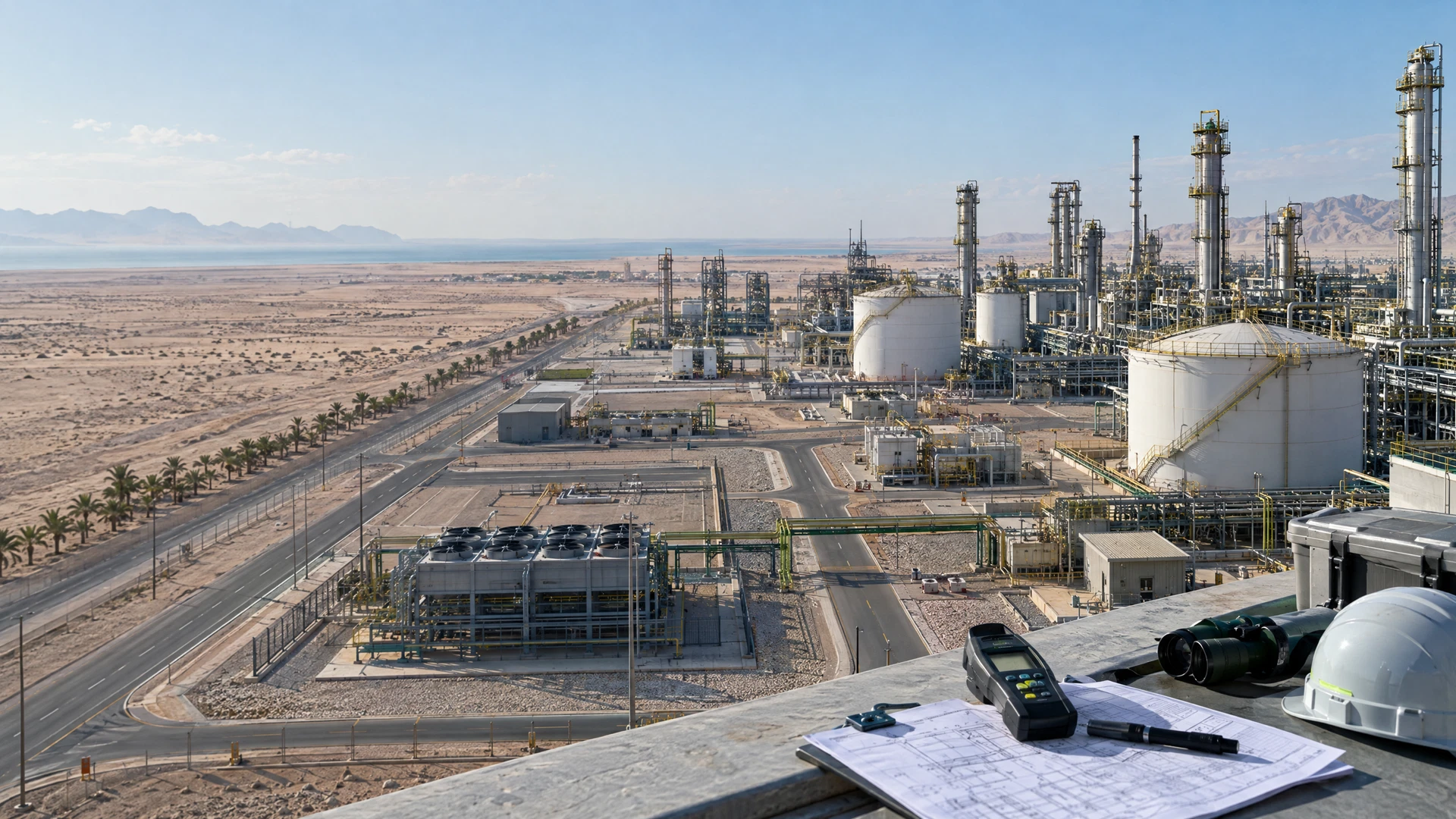
The plan starts with plot plans, process flow diagrams, equipment lists, fuel and material records, permits, stack lists, tanks, loading operations, wastewater units, flares, vents and mobile or temporary sources. Each entry receives an identifier, location, process owner, operating schedule, relevant pollutants or greenhouse gases and current evidence route.
Source discovery should include normal production, start-up, shutdown, maintenance, bypasses and credible abnormal conditions where the chosen method requires them. A drawing-only exercise can miss small but numerous components, intermittent vents or contractors’ equipment. A site walkdown with operations and maintenance personnel often resolves the gap between records and reality.
Choose evidence by decision and materiality
Evidence may include direct source testing, continuous monitoring, periodic instrument readings, mass balance, fuel or utility data, equipment specifications and approved emission factors. A higher-resolution method is not automatically better if it is applied to the wrong operating condition or boundary. Conversely, a generic factor may be too weak for a material or highly variable source.
The plan should record the selected method, why it fits the intended use, frequency, operating condition, units, detection or quantification limitations, data owner and review route. US EPA’s AP-42 explains that emission factors can derive from source tests, material balances and engineering estimates; factors still require source-specific applicability checks. For GHG reporting, the GHG Protocol Corporate Standard provides organisational inventory principles, while the responsible practitioner selects current factors and calculation rules.
Make gaps visible before mobilisation
Common gaps include untagged sources, inconsistent production units, fuel records that do not align with the reporting period, missing meter histories, no operating data for a test, unclear flare composition, incomplete component lists and laboratory requirements identified too late. The plan ranks gaps by their effect on the decision and assigns an owner and closure route.
Where direct work is justified, link to the relevant scope: stack and stationary-source testing, flare emissions sampling or fugitive emissions measurement. Data-control requirements should connect to QA/QC and traceability.
Deliverables and handover
A practical package can include the boundary note, source register, source map, evidence hierarchy, field and laboratory requirements, data request, schedule assumptions, QA/QC plan, uncertainty and gap register, responsibility matrix and handover format. It should identify what is measured, estimated, excluded or awaiting confirmation.
For scoping, provide the Saudi facility location, sector, process and utility diagrams, source lists, reporting purpose, period, permit conditions, earlier test reports, meter and production data, planned changes and deadline. Saudi Carbon Monitoring is available for projects across Saudi Arabia, including Dammam, Jubail, Riyadh, Jeddah, NEOM and Qiddiya.
A staged planning workshop
A productive workshop brings operations, maintenance, EHS, process engineering, utilities and the future inventory owner together. Begin with the plot plan and source register, then walk through each process area and operating mode. Mark where data already exist, where evidence is weak and where site access or safety will control the method. Agree who can release drawings, historian exports, invoices, laboratory records and permit information.
The workshop should end with decisions, not another unprioritised list. Assign every gap an owner, due date and proposed resolution. Separate “required before field work,” “required before calculation” and “improvement for a future cycle.” This lets procurement price the necessary campaign while protecting a longer-term data roadmap. The final plan should also define change notification: if a source, fuel, throughput or control device changes between planning and measurement, the facility alerts the technical lead so the method and schedule can be reassessed.
Frequently asked questions
Is an air-emissions inventory the same as a carbon footprint?
No. They can overlap, but pollutant coverage, boundaries, methods and reporting purposes differ. Define the intended output before collecting data.
Must every source be tested directly in facility emissions inventory measurement planning?
Not necessarily. The responsible practitioner selects evidence based on requirements, variability, materiality and data quality. Some sources may use records or appropriate factors.
What operating data should accompany a source test, and can an old result be reused?
Typically production rate, fuel or feed, control-device status, process conditions and any parameter needed to show that the run represents the agreed condition. An old result can be reused only after checking method, source configuration, operating conditions, time period, maintenance and intended use, and the reuse is documented.
Which frameworks and factor sources apply to this inventory-planning service?
The responsible practitioner selects the current GHG Protocol, US EPA AP-42, IPCC or other applicable framework and factor sources for the actual boundary, method, jurisdiction and intended use. US and global references are guidance, not Saudi law.
Who provides facility emissions inventory measurement planning in Saudi Arabia?
Saudi Carbon Monitoring provides the measurement and data plan: the source register, evidence methods, QA/QC plan and gap register. Formal accounting, source testing and laboratory work are delivered by qualified parties we coordinate.
What affects the cost of an inventory measurement plan?
Cost depends on the number and type of sources, the evidence methods selected, field and laboratory requirements, site access and safety constraints, and the quality of the data the facility already holds. Your quotation sets out the scope and price.
How long does inventory measurement planning take?
Timing depends on facility size, the number of sources and operating modes, data availability, site access and the deadline for the inventory. The schedule is set out in your quotation.
Saudi Carbon Monitoring serves projects across Saudi Arabia, including Dammam, Al Khobar, Jubail, Riyadh, Jeddah, NEOM and Qiddiya.
Request a quotation
Send us the facility location, sector, source lists and reporting purpose, and Saudi Carbon Monitoring will prepare the facility emissions inventory measurement planning scope and price for Saudi Arabia. Request a quotation