
Saudi Carbon Monitoring provides building ventilation and BMS performance monitoring in Saudi Arabia, defining performance evidence for offices, retail, hospitality and other occupied commercial buildings. We scope and coordinate the work through a qualified MEP and controls interface, and the responsible engineer confirms design, ventilation and control decisions.
You receive a written proposal setting out the scope, point and meter plan, deliverables, lead time and price. Request a quotation
Commercial buildings bring energy, comfort, occupancy and ventilation decisions together. Operators may have utility bills, BMS trends and indoor sensors, yet still lack a controlled way to compare them.
This service provides monitoring and performance evidence. It is not a green-building certification, medical advice, air purification or automatic HVAC control, and it does not replace the engineering design, approved method or regulatory requirement that applies to your building.
Map building systems and zones
Review the building layout, occupancy schedule, air-handling units, ventilation paths, meters, submeters, BMS points and existing IAQ devices. Map zones to the equipment and points that serve them. Confirm point names, units, schedules and sensor locations rather than relying on a vendor graphic.
For multi-tenant buildings, define landlord and tenant boundaries and allocation. Building totals may include common areas, central cooling, tenant loads, parking and other services that need transparent treatment.
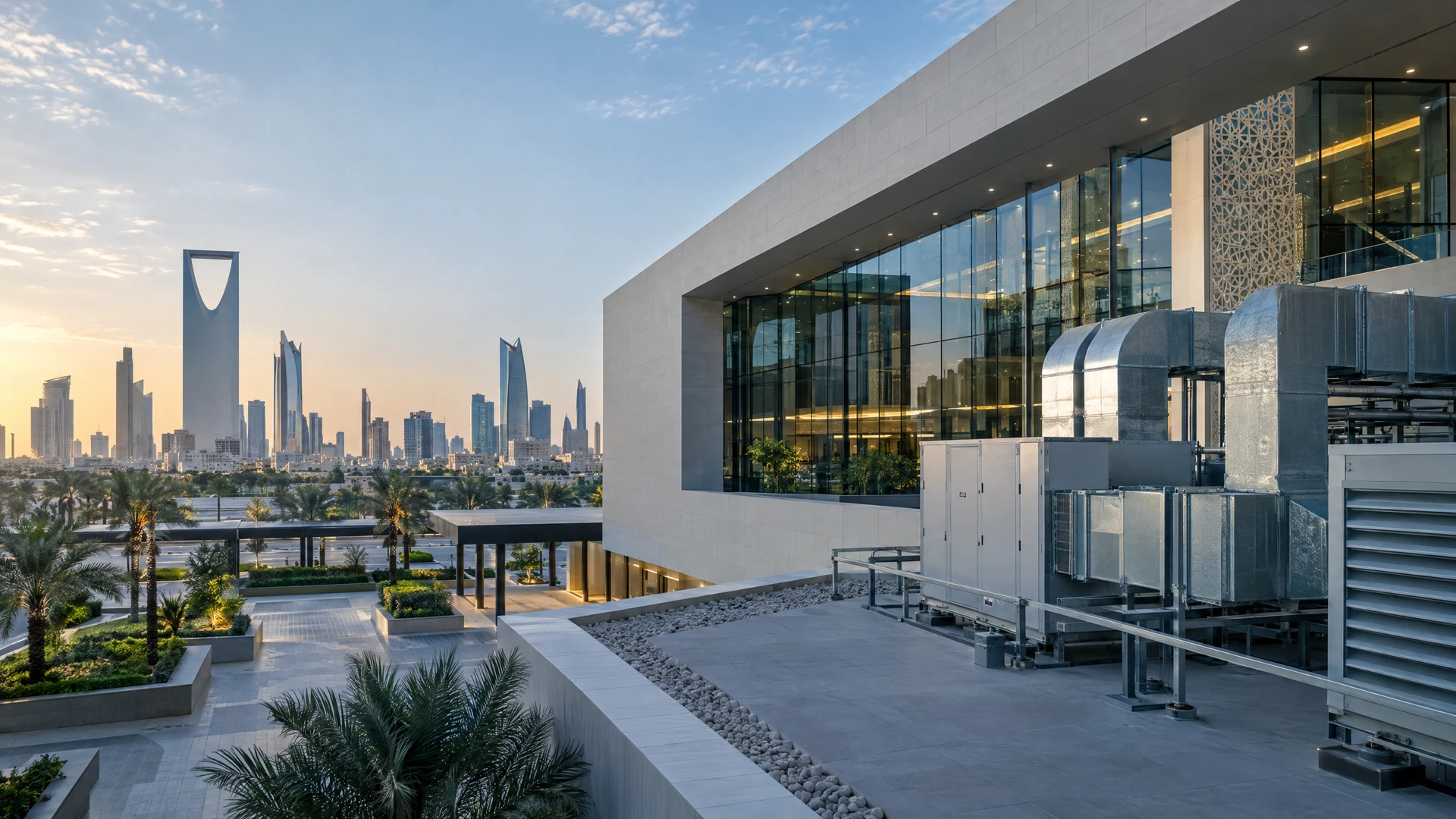
IAQ and ventilation monitoring for commercial buildings
Selected parameters may include CO2, temperature, relative humidity, particulate matter and TVOC signals, depending on objectives and device specifications. Placement, calibration or checks, occupancy and outdoor context matter. A sensor measures selected conditions at a location; it does not prove full building health.
The detailed ventilation, IAQ and BMS performance evidence service defines point mapping, trend analysis and engineering interpretation.
Connect energy and operation
Compare energy with weather, occupancy, schedules, setpoints, fan and plant status. A lower bill can reflect vacancy or weather rather than efficiency. Interval data and submeters may help isolate HVAC and other uses, but meter quality and coverage need review.
For corporate reporting, purchased electricity data can feed Scope 2 support after boundary and factor review. Building-performance metrics remain distinct from a complete GHG inventory.
Establish a practical review cycle
Dashboards may highlight schedule drift, simultaneous heating and cooling signals, ventilation exceptions, missing sensor data, abnormal baseload or comfort trends. Each alert needs an owner and investigation process. Engineering changes follow safe approval and commissioning.
Deliverables can include:
- system and zone map
- point and meter register
- measurement plan and data-quality review
- baseline and selected KPIs
- exception workflow and engineering questions
For scoping, provide the Saudi location, building use, area, occupancy, HVAC and BMS information, meters, sensors, objectives, complaints and available trend data.
A building performance pilot
Select a manageable group of zones served by known HVAC equipment, then run the pilot in this sequence:
- Verify sensors and BMS points.
- Trend indoor conditions, occupancy, controls, outdoor weather and energy over representative occupied and unoccupied periods.
- Record maintenance, special events and overrides.
- Have the MEP reviewer identify hypotheses and checks rather than prescribing changes from charts alone.
- If an adjustment is approved, document the sequence, safety review, commissioning and rollback, then compare pre- and post-change periods under similar conditions or apply an agreed adjustment.
Review occupant feedback through the client’s established process, not as clinical evidence. The pilot finishes with a verified point map, data-quality findings, operational actions and a decision about wider rollout.
Portfolio rollout
After the pilot, define a common minimum point, meter and metadata standard for the building portfolio. Retain local differences in HVAC design, occupancy and climate. Train operators to recognise missing data and overrides. Compare buildings only when boundaries and normalisation are aligned; use the portfolio view to target investigation, not to label a building efficient or healthy without engineering assessment.
Archive configuration, point lists and accepted baselines with the building record. If a controls vendor or operator changes, the evidence should remain understandable without relying on individual memory. This supports future diagnostics and protects approved reporting periods from live-system changes.
Frequently asked questions
Who provides building ventilation and BMS performance monitoring in Saudi Arabia?
Saudi Carbon Monitoring provides building ventilation and BMS performance monitoring for commercial buildings across Saudi Arabia, including Riyadh, Jeddah and Dammam. We scope the monitoring and coordinate the MEP and controls interface.
Can CO2 data prove ventilation compliance?
Not alone. A qualified MEP professional must consider design, occupancy, outdoor air, mixing, measurement quality and applicable requirements.
Does BMS performance monitoring in a commercial building save energy automatically?
No. Integration provides data or control capability; engineering, sequences, commissioning and operation determine results.
Can one sensor represent an entire floor?
Not automatically. Placement and zone variability matter. The measurement plan selects representative locations for the question.
Can building data support Scope 2 reporting?
Electricity and energy records can, after site mapping, period reconciliation and factor review by the qualified practitioner.
What affects the cost of building ventilation and BMS monitoring?
Cost depends on building size and zones, the number of meters, sensors and BMS points, the data-quality work needed, the review cycle and the deliverables. The quotation sets out the scope and price.
How long does building performance monitoring take?
Duration depends on building size, access to BMS and meter data, the period of trend data needed and the pilot scope. Lead time is confirmed in each quotation.
Saudi Carbon Monitoring serves projects across Saudi Arabia, including Dammam, Al Khobar, Jubail, Riyadh, Jeddah, NEOM and Qiddiya.
Next step
For building ventilation and BMS performance monitoring in Saudi Arabia, send us your building type, HVAC and BMS details and objectives. Request a quotation