
Saudi Carbon Monitoring coordinates stack emissions testing in Saudi Arabia for industrial facilities, scoping each test around its purpose, method, sampling location and reporting use. Stack testing produces a time-bound measurement under defined operating conditions, and its value depends on much more than placing a probe in a duct: the purpose, method, sampling location, process condition, instrument or train, quality checks, laboratory chain and reporting calculation must work together.
You receive a written proposal setting out the test scope, delivery roles, deliverables, lead time and price. Request a quotation
Saudi Carbon Monitoring scopes, coordinates and manages the work; field sampling, laboratory analysis and report sign-off are delivered by licensed or qualified parties, and each proposal names who performs the field work, who analyses samples, which accreditation or approval scope is required and who signs the technical report. Testing does not replace the permit, approved method or regulatory decision that applies to your project.
Define the purpose before the method
A test may support permit compliance, performance evaluation, an emissions inventory, control-system assessment, engineering diagnosis or a baseline before change. Those purposes can require different pollutants, averaging periods, detection limits and operating conditions. The applicable Saudi authority and current prescribed method are confirmed when the result has a regulatory use.
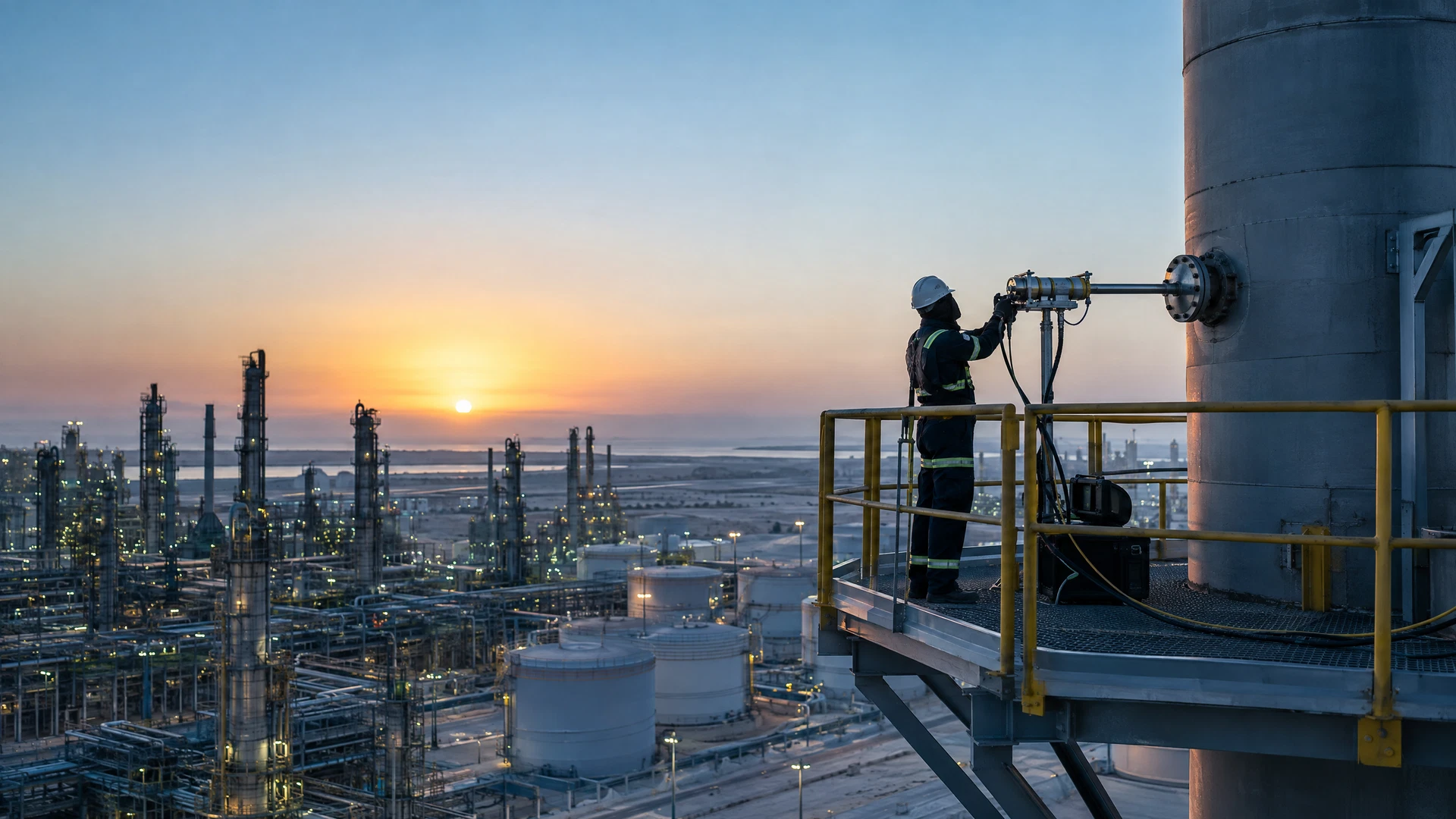
The source review records stack dimensions, access, ports, flow profile, temperature, moisture, pressure, gas composition, expected concentration range, control equipment and safe working arrangements. The test team determines whether the location is suitable for representative sampling and what modifications, platforms or shutdown coordination may be needed.
Coordinate production and sampling
A technically correct result can still be misleading if the plant condition is unclear. Before mobilisation, the test plan states the intended load, feed or fuel, control-device settings, run duration, number of runs, simultaneous process data and criteria for interruptions. Operations, EHS, maintenance and the test team work to one agreed schedule and communication route.
Depending on the method, measurements may include gas velocity and flow, oxygen or carbon dioxide, moisture, particulates, combustion gases, volatile or specific compounds. Sampling and analysis requirements vary substantially. A laboratory is selected for the relevant analyte and method, with containers, preservation, blanks, chain of custody and holding times confirmed before the field day.
Protect data quality and traceability
The field record links each run to source ID, date, time, process condition, instrument or sampling-train identifiers, calibrations and checks, raw observations, deviations and sample identity. Calculations show units, standard conditions, moisture basis, flow conversion and any averaging or blank correction. The final report distinguishes measured results from derived values and documents departures from the plan.
If the result will feed an inventory, the responsible practitioner also needs the relationship between the test condition and annual operations. One test is not automatically an annual value. Connect the result to a facility emissions inventory measurement plan and data traceability controls.
Requesting a stack emissions testing scope
Provide the facility location, stack and process description, target pollutants, permit or method reference, expected ranges, previous reports, drawings, ports and access details, operating window, control equipment, safety requirements, intended use and required date. State whether an accredited result is mandatory and which authority or assurance party will rely on it.
Stack testing is available for projects across Saudi Arabia, including industrial facilities in Dammam and Jubail, utilities near Riyadh or Jeddah, and major developments such as NEOM or Qiddiya where a defined source-testing need exists.
Mobilisation and acceptance planning
Before the field team travels, hold a readiness review covering:
- access platforms, ports and lifting;
- utilities, power and lighting;
- weather and process availability;
- permits to work and emergency arrangements;
- who can authorise a run to start or stop and who records plant conditions;
- consumables, calibration gases or laboratory media, including quantities, certificates and shipping or storage constraints.
Agree report acceptance criteria before testing. The client should know which field sheets, calibration records, laboratory documents, raw instrument files, process data, calculations and deviations will be delivered. Set a technical review period and a controlled route for questions and revisions. If a result is intended for an authority or independent verifier, make that reliance explicit so the responsible team can apply the required format and retention. This planning makes the evidentiary chain visible and contractable.
Frequently asked questions
Who provides stack emissions testing in Saudi Arabia?
Saudi Carbon Monitoring provides stack emissions testing in Saudi Arabia by scoping the test, coordinating the field team and laboratory, and managing the data record.
Does stack testing replace continuous emissions monitoring?
No. Periodic testing and CEMS serve different purposes. The proposal sets out how each supports compliance, calibration, performance or inventory needs.
How do I choose stack emissions testing for my plant?
Confirm the method early, before mobilisation. Method choice affects ports, equipment, laboratory preparation, detection limits, run conditions and safety planning.
Is one test representative of the full year?
Not automatically. Representativeness depends on source variability, operating profile, method and intended calculation. The inventory practitioner approves extrapolation.
What if the sampling location is unsuitable?
The test team documents the constraint and recommends an engineering, access or method response before accepting the work.
What affects the cost of stack testing?
Cost depends on the number of stacks and runs, target pollutants and method, laboratory analysis, access and platform needs, mobilisation and the reporting deliverables required.
How long does stack testing take?
Timing depends on the method, number of runs, access readiness, plant operating schedule, laboratory turnaround and report review. Lead time is confirmed in each quotation.
Saudi Carbon Monitoring serves projects across Saudi Arabia, including Dammam, Al Khobar, Jubail, Riyadh, Jeddah, NEOM and Qiddiya.
Request stack emissions testing in Saudi Arabia
Send us your stack details, target pollutants and intended use, and we will scope your stack emissions testing in Saudi Arabia. Request a quotation