
Saudi Carbon Monitoring provides oil and gas emissions measurement support in Saudi Arabia, coordinating flare, stack, fugitive and LDAR evidence for oil, gas and petrochemical facilities. We scope, coordinate and manage the programme; licensed or qualified parties deliver the field testing, laboratory analysis and any verification.
You receive a written proposal setting out the scope, methods, responsibilities, lead time and price. Request a quotation
Oil, gas and petrochemical assets can contain combustion sources, process vents, flares, storage, loading operations and thousands of components. A defensible measurement programme needs source identity, safe access, operating context, suitable methods and controlled follow-up. This emissions-measurement programme support is available for projects across Saudi Arabia, including Jubail and Dammam.
Equipment, methods and field support do not replace the permit, approved method or regulatory decision that applies to your project. Authority, permit, hazardous-area, security and site requirements are confirmed for each engagement, and the applicable authority decides acceptance.
Build an asset and source picture
Start with process flow diagrams, equipment and stack lists, flare systems, tank and loading data, component registers, fuel and feed records, permits and earlier test reports. Reconcile documents with a controlled field walkdown where access permits. Record normal, start-up, shutdown, maintenance and credible abnormal modes relevant to the scope.
The facility emissions inventory measurement plan connects each source to direct measurement, continuous monitoring, periodic survey, engineering calculation or approved factor. The responsible inventory practitioner confirms annualisation and GHG treatment.
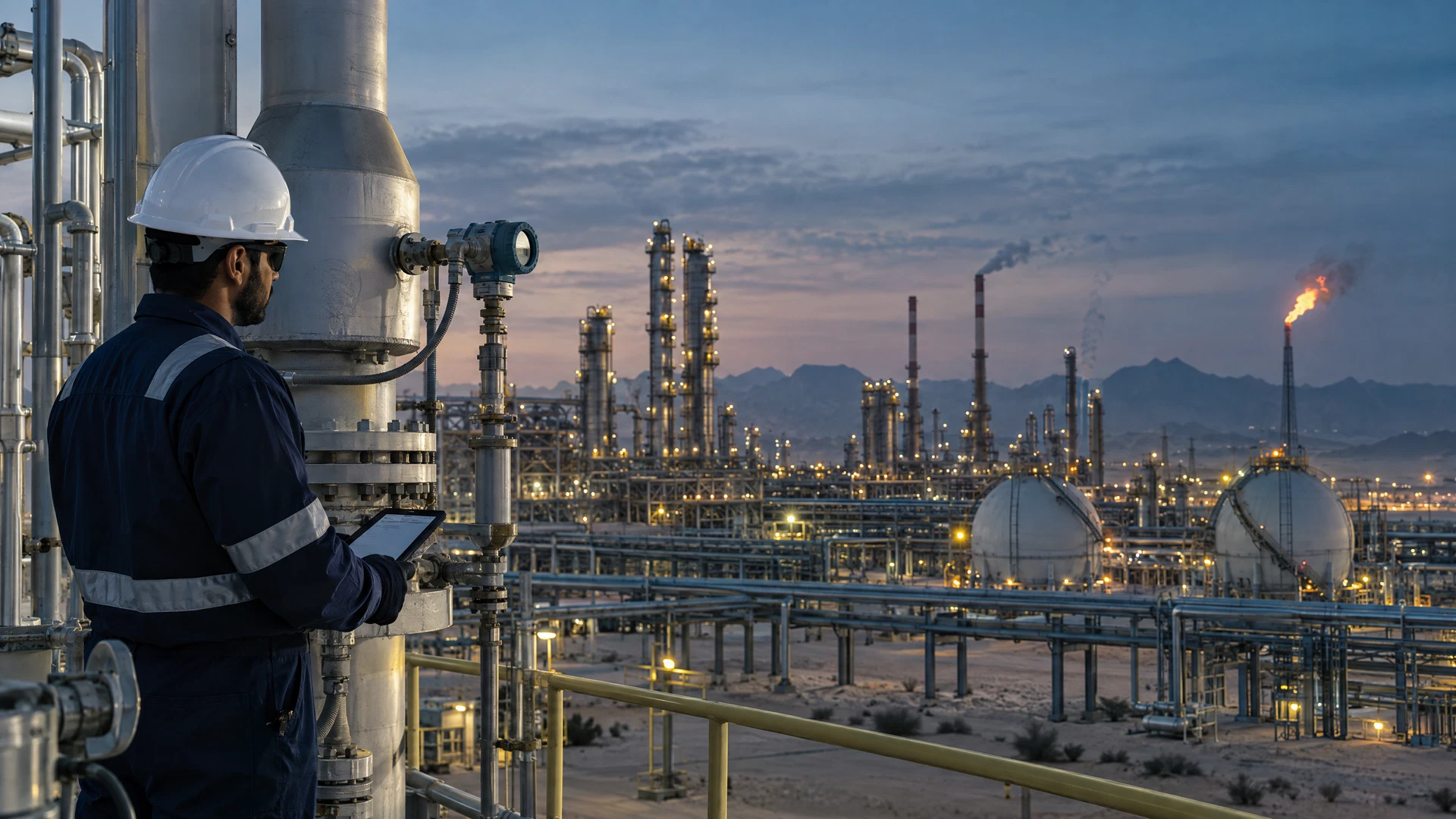
Oil and gas emissions measurement: stack and flare coordination
Combustion and process sources may require stack and stationary-source testing under defined operating loads. Flare work can combine process flow and composition records with flare sampling and performance measurement. Field plans need sampling locations, analytes, run conditions, laboratory requirements, permits to work and HSE responsibilities.
Establish a complete LDAR cycle
Fugitive programmes need current component populations, approved detection methods, leak criteria, repair handover, recheck and exceptions. LDAR programme support defines governance, while Method 21 and OGI coordination addresses field approaches. Detection is not automatically mass quantification.
Recurring leaks and delayed repairs should reach maintenance and engineering management. Quantified emissions or avoided-emissions claims require a documented method, time basis and qualified GHG review.
Keep field data ready for inventory use
Link every result to source or component, process condition, instrument, method, calibration or checks, units, time and reviewer. For annual inventory use, retain operating hours, throughput, event duration and other drivers. The QA/QC and traceability service creates that chain.
Scope inputs
Provide the following so we can scope the programme:
- Saudi location and facility type
- units, source and component counts, products and streams
- permit or corporate requirements
- hazardous-area classification and access restrictions
- prior data, inventory purpose and schedule
Jubail and Dammam are among the industrial locations where this service is available.
Plan around process safety and access
Field measurement must be integrated with the facility’s permit-to-work, hazardous-area, isolation, simultaneous-operations and emergency arrangements. Identify equipment certifications, personal protective requirements, escorts, security and communication before mobilisation. A technically attractive method is not suitable if it cannot be executed safely or without compromising process control.
Coordinate campaigns with operations so the intended source or component population is active and representative. If conditions change, record and assess the deviation instead of continuing only to meet a schedule. After field work, hold a joint review covering:
- coverage and failed checks
- process events and samples
- open repairs
- inventory implications
This cross-functional gate prevents isolated contractor reports from bypassing the people who understand the plant and ensures technical findings reach maintenance and data owners.
Technical handover to accounting
The GHG practitioner should receive controlled source identities, field methods, results, operating conditions, coverage, repair history, calculations and uncertainty, not only summary tonnes. Review how each dataset represents the reporting period and which sources remain estimated. Preserve changes and approvals so the same evidence can support management decisions and later verification without being reinterpreted from scratch.
For periodic campaigns, schedule the next review around operational change and the governing programme rather than copying last year’s dates automatically. New equipment, fuel, throughput or maintenance can change priorities and methods. All remaining assumptions are stated in the issued handover.
Frequently asked questions
Who provides oil and gas emissions measurement in Saudi Arabia?
Saudi Carbon Monitoring provides oil and gas emissions measurement support across Saudi Arabia. We scope and coordinate the programme, and the proposal names the licensed or qualified parties and any required accreditation scope for the field work.
Can one oil and gas emissions measurement campaign cover stacks, flares and fugitives?
It can be coordinated, but each source type needs its own method, competence, safety plan, records and interpretation.
Does OGI quantify methane automatically?
No. Under applicable method conditions, OGI can visualise gas leaks, but it does not by itself provide a direct emission rate. Any use of 40 CFR Part 60 Appendix K or another method is confirmed for the programme and is not presented as Saudi law.
Can flare data be extrapolated annually?
Only through qualified review of operating modes, flow, composition, representativeness and uncertainty.
What affects the cost of oil and gas emissions measurement?
Cost depends on the number and type of sources and components, the methods required, hazardous-area and access conditions, laboratory analysis, campaign duration and the reporting or handover needed. The quotation sets these out.
How long does emissions measurement take?
Duration depends on facility size, source and component counts, access and permit-to-work arrangements, operating-mode coverage, laboratory turnaround and the handover required. Lead time is confirmed in each quotation.
Saudi Carbon Monitoring serves projects across Saudi Arabia, including Dammam, Al Khobar, Jubail, Riyadh, Jeddah, NEOM and Qiddiya.
Next step
For oil and gas emissions measurement in Saudi Arabia, send us your facility type, source list and schedule. Request a quotation