
Saudi Carbon Monitoring provides flare and fugitive emissions inventory data support in Saudi Arabia, helping facilities separate detection, measurement, quantification and annualisation so flare and fugitive sources can be used as inventory inputs. We scope and coordinate the evidence plan, and licensed or qualified parties deliver the field measurement and laboratory work.
You receive a written proposal setting out the evidence plan, scope, responsibilities, lead time and price. Request a quotation
Flare and fugitive sources can be difficult inventory inputs because they vary over time and are not always captured by a single meter. Each step of detection, measurement, quantification and annualisation answers a different question. This support does not replace the permit, approved method or regulatory decision that applies to your facility, and a separate verifier decides the sufficiency of evidence and the inventory conclusion.
Flare evidence needs operating context
Flaring can change with routine operation, start-up, shutdown and upset events. Useful records can include flow, gas composition, heating value, assist conditions, duration, contributing units, weather and event cause. The measurement plan states which condition it represents.
Evidence routes may include process records, header or feed sampling, engineering calculation, remote sensing or direct plume sampling.
One sample should not automatically be applied to the entire year. The inventory practitioner decides how conditions are grouped and how gaps are estimated.
Fugitive evidence needs a complete population
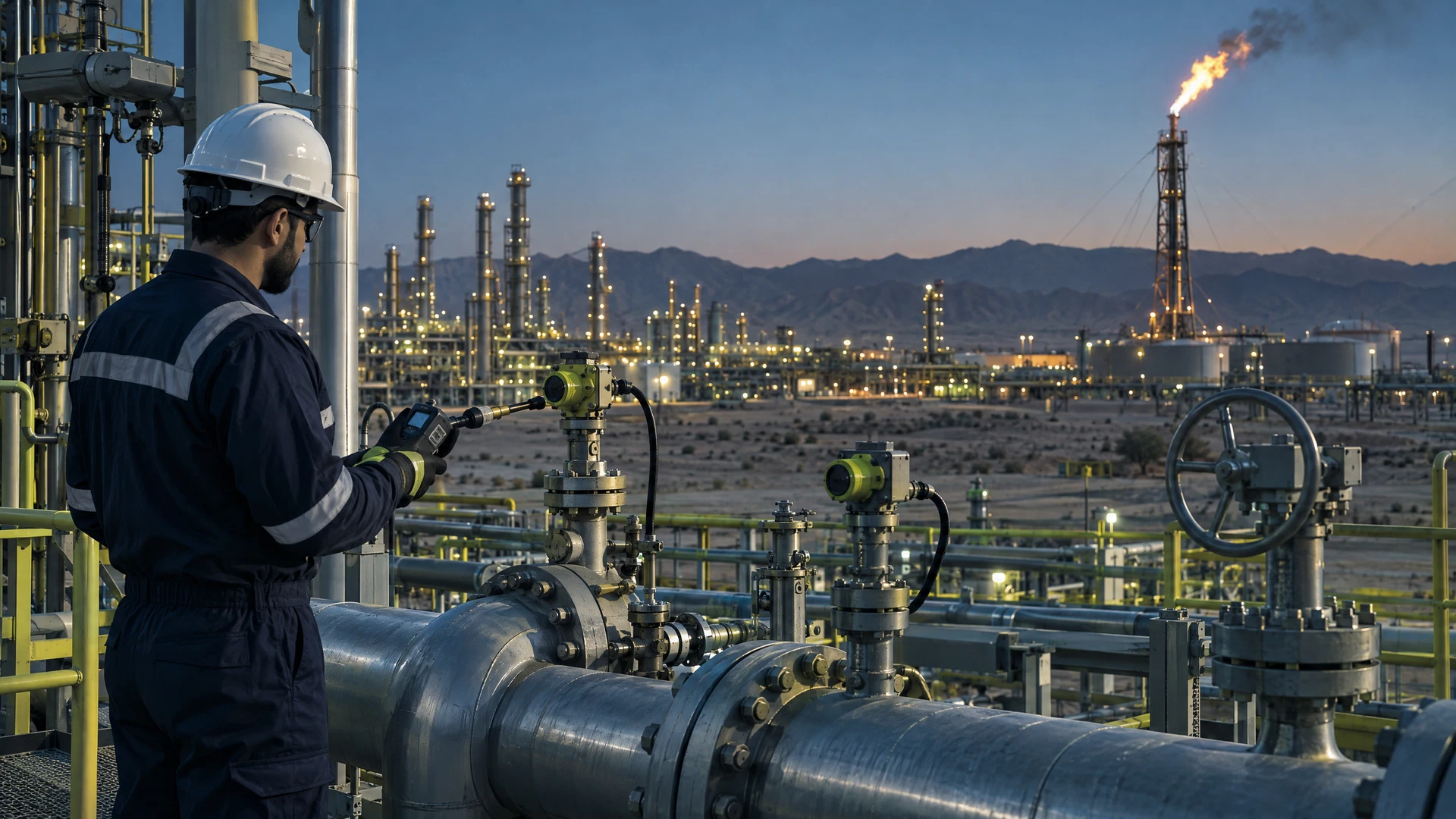
A leak survey can only be interpreted against the equipment and components it covers. The register identifies valves, pumps, compressors, connectors, seals and other sources by unit, service and operating status. Survey results also record inaccessible or out-of-service components.
Method 21 and optical gas imaging can detect leaks under different procedures. Detection does not automatically give a mass rate. Quantification may use correlations, bagging, high-flow sampling or other approved methods.
Link field results to time
An annual estimate needs duration or activity. For a flare, that may be flow and time by operating mode. For a component leak, it may be detection date, assumed start, repair date, recheck and method-specific calculation. Assumptions should be documented and sensitivity considered where significant.
LDAR records can improve timing by showing detection, repair and closure. A one-off survey without repair history may leave a wider duration uncertainty.
Protect units and quality
Retain wet/dry basis, standard conditions, flow and concentration units, molecular or gas assumptions, sample custody, calibration and calculation versions. For fugitive work, keep component IDs and instrument checks. For flare work, align sample times with process data.
The flare measurement service and fugitive measurement service define field scopes. Scope 1 data support governs their accounting use.
Use measurement where it changes decisions
Direct measurement can be valuable for material, variable or poorly understood sources. It is not automatically necessary for every minor source. Compare expected improvement in uncertainty with safety, access and cost, then document the chosen evidence hierarchy.
Flare and fugitive emissions inventory data: build an evidence hierarchy
For each source, list the preferred evidence, acceptable alternative and fallback:
- Flare: prioritise measured flow and representative composition, then use an approved engineering method for gaps.
- Fugitives: prioritise a complete component programme with accepted quantification, then use suitable population factors where direct data are incomplete.
The inventory practitioner approves the hierarchy and records when fallbacks are used.
Do not let the most sophisticated field result dominate an incomplete system. A precise plume sample cannot compensate for unknown annual flow, and a quantified leak cannot represent un-surveyed units without justification. Improve coverage and time basis alongside measurement quality.
Review the annual calculation
Reconcile flare activity with events and operations. Reconcile component coverage with the register and repair history. Check units, standard conditions, gas composition, global-warming-potential basis and factor versions. Run sensitivity on material assumptions such as duration or composition. Keep the calculation linked to field and laboratory evidence. The result can then enter Scope 1 or another inventory category under the responsible practitioner’s approval, with uncertainty and exclusions stated clearly.
When to repeat measurement
Repeat or revise the programme after material process, flare, fuel, component-population or control changes, or when prior data no longer represent operating modes. Use inventory sensitivity and uncertainty to prioritise the next campaign. A fixed annual schedule may be required by a programme, but internal improvement work should also respond to change and evidence quality.
After each campaign, update the source register and method record, not only the annual calculation. This leaves the organisation with a stronger measurement system and prevents future practitioners from treating an old event as a timeless source characteristic.
Frequently asked questions
Who provides flare and fugitive emissions inventory data support in Saudi Arabia?
Saudi Carbon Monitoring provides flare and fugitive emissions inventory data support across Saudi Arabia. We scope the evidence plan and coordinate licensed or qualified parties for field measurement and laboratory work.
How do I choose between measurement and factors for flare and fugitive emissions inventory data?
Measurement is not always used instead of factors. The inventory practitioner selects the evidence best suited to source, materiality, quality and framework.
Can a flare sample represent all flare events?
Not automatically. Composition and operation can vary. The programme may need several conditions or a combined evidence route.
Does finding a fugitive leak quantify it?
No. Detection locates or screens the leak; quantification requires an accepted method.
How is leak duration estimated?
Under the chosen programme and accounting method, using survey, repair and recheck dates plus documented assumptions.
What affects the cost of flare and fugitive emissions measurement?
Cost depends on the number of flares, components and operating modes, the methods used, access and safety conditions, laboratory work and the reporting needed. The quotation sets out the scope and price.
How long does flare and fugitive measurement take?
Duration depends on source and component counts, access, operating-mode coverage, laboratory turnaround and the handover required. Lead time is confirmed in each quotation.
Saudi Carbon Monitoring serves projects across Saudi Arabia, including Dammam, Al Khobar, Jubail, Riyadh, Jeddah, NEOM and Qiddiya.
Next step
For flare and fugitive emissions inventory data in Saudi Arabia, send us your facility type, flare and component details and reporting purpose. Request a quotation